Authentication Expert Report, \ Summons/Warrant/ Verdict / Iran Human Rights Iranian Laws, Islamic Law, capital punishment, Stoning, Civil Law, Criminal Law, panel code. Have you got any question, just ask.
Friday, 19 April 2019
Tuesday, 8 January 2019
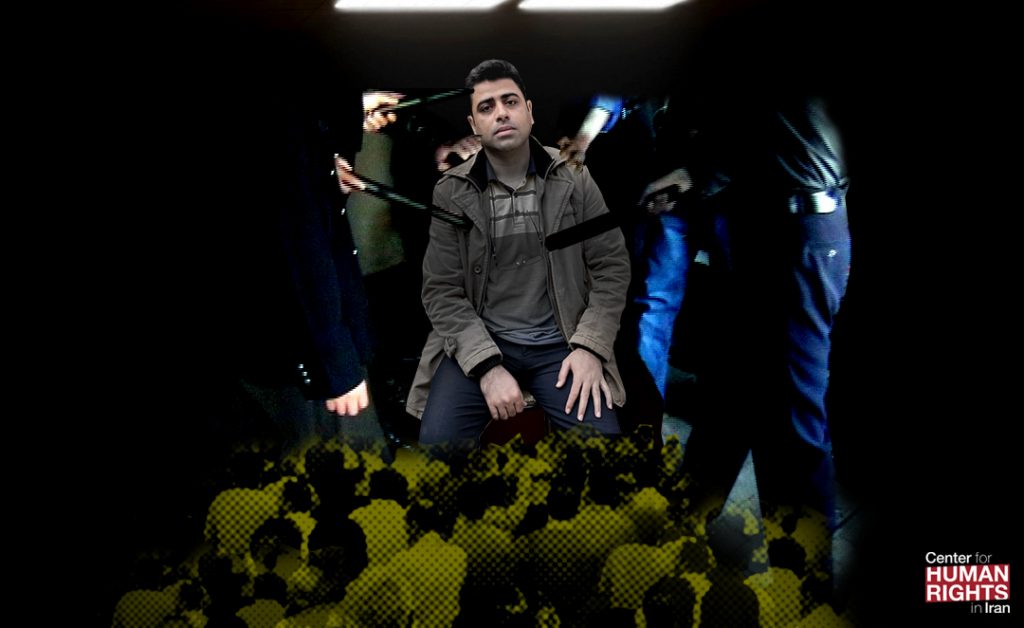
Ismaeil Bakhshi Tortured in prison
Labor Activist of Rouhani’s Intelligence Ministry

Held Without Access to Lawyer, Bakhshi Beaten During 25-Day Detention
January 4, 2018—The beating and torture of the labor activist Smaeil Bakhshi (also spelled Esmail Bakhshi), while he was in detention by agents of Iran’s Intelligence Ministry, is a blatant violation of international and domestic Iranian law, and the authorities in Iran should immediately investigate and prosecute any officials involved, the Center for Human Rights in Iran (CHRI) said in a statement today.
CHRI also calls on the UN and the international community to forcefully communicate to the authorities in Iran that the violent and unlawful abuse of detainees is unacceptable.
Bakhshi, a representative of protesting Haft Tappeh sugarcane workers in Shush, southwest Iran, revealed in a letter posted on Instagram on January 4, 2019, that he was severely beaten during his 25 days in detention and left with serious and lasting physical injuries.
“Iranians take great risks to expose these violations, and the Rouhani administration, parliament and the judiciary should respond to these courageous voices for justice and protect them.” said Hadi Ghaemi, CHRI executive director.
“Yet so far, Rouhani has remained silent, refusing even to hold his own agencies accountable for these violations, and a complicit judiciary protects the state officials who commit these abuses” Ghaemi said.
CHRI urgently calls on the authorities in Iran to:
- Conduct an independent and thorough investigation into the treatment of Smaeil Bakhshi during his detention.
- Establish a permanent, independent mechanism to thoroughly investigate all allegations of abuse against detainees, and institute preventative mechanisms whereby interrogations and all other aspects of detention in Iran can be monitored for compliance with the law.
- Ensure that the rights of detainees are protected, including the right to counsel.
- Ratify the UN’s Convention against Torture and Other Cruel, Inhuman or Degrading Treatment or Punishmentand its Optional Protocol and legislate accordingly.
CHRI calls on the UN and all Member States to:
- Call for an independent and thorough investigation into the treatment of Smaeil Bakhshi during his detention and other detained labor activists and demand that any officials found responsible are held accountable to the law.
- Urge Iran to address consistent and credible reports of physical abuse and torture in Iranian prisons and detentions centers through the establishment of independent monitoring, reporting and preventative mechanisms.
Labor Activist Reports Brutal Beatings, Lasting Injuries
In the letter Bakhshi posted on Instagram, he described his torture and resulting injuries. “During the first few days, without reason or any conversation, they tortured me and beat me with their fists and kicked me until I was going to die. They beat me so much I couldn’t move in my cell for 72 hours. I was feeling so much pain that I couldn’t even sleep without suffering,” Bakhshi wrote in his open letter.
“Today almost two months after those difficult days [Bakhshi was released on bail December 12, 2018] I still feel pain in my broken ribs, kidneys, left ear and testicles,” he added.
“But worse than the physical torture was the psychological torture. I don’t know what they did to me but I turned into a washed-up rat. My hands are still trembling. I used to walk with my feet firmly on the ground but I was humiliated into a different person. I still get severe panic attacks despite taking [anxiety medication].”
“I have a question for His Excellency the Intelligence Minister, who happens to be a religious cleric: From an ethical and humanitarian perspective, what is Islam’s ruling on torturing a detainee? Is it permissible? If so, to what extent?”
Article 38 of Iran’s Constitution states that “All forms of torture …are forbidden” and the International Covenant on Civil and Political Rights (ICCPR), to which Iran is a State Party, states in Article 7: “No one shall be subjected to torture or to cruel, inhuman or degrading treatment or punishment.”
Bakhshi continued: “More important than the physical and psychological torture was the recording of phone conversations between me and my family by your intelligence agency. My interrogator said he knew everything about my life. He said he knew how many times my wife had fought with me because of my labor struggles. When I asked how he knew, he said my phone calls were recorded for a long period of time.”
“Now my question to you as the Intelligence Minister, a cleric and religious person is: From an ethical and humanitarian perspective, does Islam allow the recording of the most private conversations between human beings?”
Article 25 of Iran’s Constitution states “the recording and disclosure of telephone conversations…and all forms of covert investigation are forbidden.”
Continuing to address President Rouhani’s Intelligence Minister, Bakhshi said: “Mr. Alavi, I am still suffering from the terrible impact of the 25 days of unjust detention by the Intelligence Ministry…but those two basic questions are eating my brain and only you can answer them. I and the honorable people of Iran have the right to know the answers… Therefore I, Smaeil Bakhshi, challenge you, Mr. Alavi, to a live televised debate to hear your response.”
The abuses committed against Bakhshi include not only unlawful arrest and torture under detention, but denial of due process as well. In an interview with Kalame on December 2, 2018, Bakhshi’s lawyer, Farzaneh Zilabi, expressed concern for her client’s condition whom she had not been able to meet while in detention.
On November 29, 2018, Sadegh Jafari Chegani, the judiciary’s representative in Shush dismissed earlier reports that Bakhshi had been physically abused. “The reports published in cyberspace and by enemy media outlets are totally false and the suspect, Smaeil Bakhshi, is completely healthy and he had telephone contact with his family today,” Chegani said.
The judiciary official added: “Publishing such false reports are aimed at disturbing public opinion at a time when a portion of the lawful demands for the payment of back salaries to the sugarcane company workers has been met and preparations have been made to harvest the sugarcane in the fields.”
Rouhani and Parliament Silent on Abuses
During his nearly six years in office, President Rouhani has remained silent on human rights abuses committed by government agencies under his control, including the Intelligence Ministry, which reports directly to the president and has become a leading human rights violator, responsible for the arrest of numerous activists, journalists, students and religious and ethnic minority leaders.
This record directly contradicts the verbal pledges Rouhani repeatedly made during his 2013 and 2017 presidential campaigns to defend citizen rights, and the Citizens’ Rights Charter he signed that ostensibly defends Iranians’ civil and political rights. Article 60 of the charter states “physical or psychological torture…shall constitute a violation of citizens’ rights; and, aside from being legally prosecutable, the results obtained through these means will not be admissible.”
Members of Iran’s Parliament have also failed to question Intelligence Minister Alavi about the abuses reportedly committed by agents of his ministry.
Labor Activist’s Torture Prompts Public Outcry in Iran
The public revelation of Bakhshi’s physical abuse by security and judicial agents has led to a public outcry in Iran on social media, with hundreds of journalists and activists demanding an investigation and punishment of those responsible for the violations of both domestic and international laws.
Tehran-based attorney Ali Mojtahedzade tweeted: “Revelations of torture by Smaeil Bakhshi need a response from the Intelligence Minister as well as most certainly from Rouhani, Mr. Alavi’s boss, who bears responsibility. But primary responsibility rests with the judicial system which has to step in and punish the perpetrators in front of the nation.”
Other commentators noted that the torture of Bakhshi was not an isolated incident. Labor affairs reporter Roozbeh Bolhari tweeted: “Before Smaeil Bakhshi there have been other workers who also suffered torture, such as Reza Shahabi, and Mahmoud Salehi, who lost his kidneys in the detention center of Rouhani’s Intelligence Ministry.”
During the protests that roiled Iran in December 2017-January 2018, and have continued intermittently even if less intensely since then, there were numerous reports of beatings of detainees that were being held without charge and the suspicious deaths while in detention of several of them, none of which ever received an independent investigation.
Long History of Mistreatment and Torture in Iran’s Detention Centers and Prisons
The psychological and physical abuse, beatings, torture and even deaths in Iranian prisons have been long documented and condemned by the United Nations and international human rights organizations.
The February 2018 report of the UN Secretary-General on Iran stated that “The Secretary-General remains concerned about continuing reports indicating that the practice of torture and ill-treatment in the Islamic Republic of Iran persists. Such reports point to a pattern of physical or mental pressure applied upon prisoners to coerce confessions.… Incidents documented and reported by civil society organizations include blunt force trauma, positional torture, burns, sharp force, electric shocks, use of water, crushing, pharmacological torture, asphyxiation, and amputation, as well as sleep deprivation, threats, humiliation, and prolonged solitary confinement.” The UN Special Rapporteur on human rights in Iran also expressed concern in his September 2018 report on Iran over reports relating to the commission of torture.
Many of the comments posted by Iranians on social media similarly expressed frustration over the long and continuing pattern of torture in Iranian prisons and detention centers.
Arash Bahmani, an Iranian journalist, wrote: “It’s very interesting to see the reaction of those who, after reading Smaeil Bakhshi’s letter, suddenly realized there’s torture going on in the prisons and though the prisons were a paradise. Torture has always been committed under all governments in the Islamic Republic since the beginning until today, especially against political prisoners and prisoners of conscience.”
Documentary filmmaker Mostafa Azizi commented: “We listen to Smaeil Bakhshi in disbelief as he bravely tells us about torture from the wolf’s den. Savage acts of torture have been the norm in this past 40 years but challenging them so blatantly inside the country has been rare. Let’s spread his words. He’s the enchained symbol of human dignity.”
Workers Unable to Peacefully Demand Their Rights in Iran
Bakhshi’s original arrest and detainment took place within a larger context of labor unrest in Iran and workers’ inability to peacefully defend their rights. In particular, workers have been protesting the lack of payment of wages and the arrest of labor leaders who try to peacefully address this issue.
The issue of unpaid wages has been a continuous one in Iran over the last few years, with numerous companies in a broad range of sectors, including steel, sugar refining, equipment manufacturing and other industries refusing to pay workers—at times for months on end. When workers protest, they are arrested.
The rights of Iranian workers have been severely violated by the inability of independent unions to function effectively, undermining collective bargaining and grievance mechanisms. Striking workers risk termination of employment and arrest, and independent labor leaders are routinely prosecuted and sentenced to long prison terms under sham national security-related charges.
The Judiciary branch in Shush has charged Bakhshi with “disturbing public order” and “assembly and collusion against national security.” In addition, in Ahvaz, the capital of Khuzestan Province, he is facing the charge of “membership in an organization with intention to disturb national security.”
The inability of Iran’s workers to demand payment for work done, to peacefully demand their rights and protest are in clear violation of Iran’s domestic and international legal commitments.
Iran’s Labour Code specifies in Chapter III, Section 37 that “Wages shall be paid at regular intervals.” The International Labour Organization, of which Iran is a founding member, requires that wages be paid regularly and defends the right to strike. The International Covenant on Economic, Social and Cultural Rights, to which Iran is a State Party, recognizes in Article 7 “the right of everyone to…remuneration” and in Article 8 the right to strike. The International Covenant on Civil and Political Rights (ICCPR), which Iran is also a State Party to, guarantees the rights in Articles 21 and 22 to peaceful assembly and freedom of association, respectively.
In addition to detained Haft Tappeh workers, Iran’s Intelligence Ministry agents on December 4 in Tehran arrested Asal Mohammadi, a young journalist who had been posting reports about the protesting sugarcane workers. Mohammad was later transferred to the ministry’s detention center in Ahvaz.
“Iranian citizens are arrested unlawfully and then risk life and limb once behind bars because Iran’s intelligence and security officials can beat, torture and sometimes even kill detainees with complete impunity,” said Ghaemi. “The international community must communicate the unacceptability of this behavior to Iranian officials at every bilateral and multilateral opportunity.”
https://iranhumanrights.org/2019/01/labor-activist-smaeil-bakhshi-tortured-by-agents-of-rouhanis-intelligence-ministry/
Hamed Aynehvand has been sentenced to six years in prison
Political journalist Hamed Aynehvand has been sentenced to six years in prison without the presence of his lawyer on the basis of charges brought by Iran’s Islamic Revolutionary Guard Corps’ (IRGC), the Center for Human Rights in Iran (CHRI) has learned.
Aynehvand, who was arrested after criticizing state policies in his writings, was convicted without due process or a chance to present his defense because the court wouldn’t allow him to choose his own lawyer, telling him to instead pick one from a list approved by the judiciary.
On December 25, 2018, attorney Hossein Bayat told the state-run Islamic Republic News Agency (IRNA) that Aynehvand had been sentenced to six years in prison by Branch 28 of the Revolutionary Court in Tehran presided by Judge Mohammad Moghiseh on charges of “propaganda against the state” and “assembly and collusion against national security.” The sentence would be appealed, Bayat added.
“Mr. Bayat was lawfully representing Hamed’s case but Judge Moghiseh rejected him because he is not on the list of lawyers trusted by the head of the judiciary and therefore the trial took place in the absence of his lawyer and without presenting a defense,” a friend of Aynehvand told CHRI on January 2, 2019.
“He was in solitary confinement for a month and a half and questioned almost every day but the interrogators did not find anything against him except his published articles, which were presented by the IRGC to Judge Moghiseh who accepted all of them as evidence,” added the source who requested anonymity.
https://iranhumanrights.org/2019/01/iranian-journalist-sentenced-to-six-years-in-prison-without-lawyer/
Wednesday, 17 June 2015
27 Executions in Iran- One Execution Every Two Hours So Far in June
Tuesday, 16 June 2015
IRAN: 25 Prisoners Transferred for Execution- International Community Maintains its Silence
Another group of 25 prisoners have been transferred for execution in the coming days in Ghezelhesar prison. The total number of the executions since May 6. in Ghezelhesar prison will reach to 80, if the prisoners transferred today are executed. Meanwhile the international community maintains its silence towards the arbitrary mass-executions by the Iranian authorities. Once again Iran Human Rights calls for the international reactions.
Iran Human Rights, June 6, 2015: According to reports by reliable sources in Iran, 25 prisoners have been
transferred to solitary confinement in the Ghezelhesar prison of Karaj (west of Tehran). These prisoners are scheduled to be executed in the coming two days. All the prisoners are charged with drug-related offences. Previous reports from IHR shows that many of the prisoners charged with drug offences are subjected to torture, forced confessions and unfair trials.
According to reports by IHR, 56 prisoners have been executed in the Ghezelhesar prison of Karaj since May 6. 44 of these executions have taken place following a peaceful gathering of the prisoners in the prison yard where they were carrying handwritten banners asking the Iranian Supreme leader Ali Khamenei for reduction in their sentences. If the 25 prisoners transferred today are executed the number of executions for drug offences in the Ghezelhesar prison will pass 80. There are more than 2000 prisoners who are on the death row for drug offences in this prison.
IHR strongly condemns the unprecedented number of executions in one prison, and calls for the international community to stop its silence and show immediate reaction.
Mahmood Amiry-Moghaddam, the spokesperson of IHR said: “Hundreds of prisoners are in serious danger of execution. The United Nations, European Union and all countries with diplomatic ties with Iran must stop their silence and react immediately in order to stop a humanitarian disaster in the Iranian prisons.
24 of the prisoners who were transferred today were from different rooms in the Unit 2 of Ghezelhesar prison, while one prisoner identified as “H. N.” was transferred from the new “Cenra prison of the greater Tehran”. According to IHR’s sources “H. N.” stubbed and murdered an Afghan prisoner while being transferred and his execution is most probably postponed due to the new “murder” charges. Seven of the prisoners from the Unit 2 (room no. 1) of Ghezelhesar are identified as: “Reza Mansouri, Reza Karegari, Jasem Veisi, Salar mahmoudzadeh, Ali Taghipour, Behrouz Sahraei and Mostafa Kouhi”.
Read more:
Mass-Executions Continue: 11 Executed in Ghezelhesar Prison
More than 30 other prisoners might be executed in the coming days. They are being held in the quarantine of the Ghezelhesar prison now.
Iran Human Rights, June 8, 2015: According to reports by reliable sources, 11 prisoners were hanged in the Ghezelhesar prison of Karaj (west of Tehran) early Monday morning.
On Saturday IHR reported about the transfer of 25 prisoners to the quarantine of the Ghezelhesar prison for execution. The number increased to 47 as IHR received reports about the transfer of additional 22 prisoners from Rajai Shahr and Greater Tehran Central prison to Gehzelhesar for execution. 
The remaining prisoners are being held in the quarantine of the prison and their executions can be implemented in the coming hours or days.
All of these prisoners are convicted of drug offences. One of the prisoners who was hanged today is identified as “Mahmood Samimi” (picture).
Since May 6, at least 67 prisoners convicted of drug offences have been executed in the Ghezelhesar prison of Karaj (west of Tehran). The executions dramatically increased after a group of Ghezelhesar death row prisoners gathered in the prison yard calling on the Iranian Supreme leader Ali Khamenei to reduce their sentences. This happened on May 21. Since then prisoners have been executed every week in groups of 11 up to 22 executions at a time.
The international community has not reacted to these executions yet.
13 Prisoners Hanged to Death in Iran- One Hanged in Public
Iran Human Ri
ghts, June 12 2015: According to official reports from Iran, 13 prisoners were hanged to death between Wednesday and Thursday.
A state-run newspaper in Iran reported on the execution of 11 prisoners in Karaj’s Rajai Shahr Prison on Wednesday. The newspaper listed their charges as murder and gang-related, but did not provide any details except for their ages ranging from 25 to 57.
The website of the Attorney General of the province of Ardebil reported on the execution of one prisoner on Thursday for possessing 163 grams of heroine. The charge was reportedly issued in branch 1 of the Revolutionary Court in Orumiyeh where the prisoner was sentenced to death by hanging.
The Attorney General’s office of the province of Fars reported on the public execution of “Mohammad Javad V.”, a prisoner charged with rape. The prisoner was publicly hanged to death amid onlookers in the county of Fasa.
Two Prisoners Hanged to Death in Rasht on Saturday
Two Prisoners with drug related charges were hanged to death in Rasht on Saturday
Iran Human Rights, June 15, 2015: According to official reports from the Department of Justice in Gilan, two prisoners with drug related charges were hanged to death in Lakan Prison (I.e. Rasht Central Prison) on Saturday morning. The report identifies the prisoners as E.M., 54 years old and Q.P., 44 years old.
The report claims that E.M. was charged with possession of 994 Kilograms of heroin and Q.P. was charged with selling, buying, and possessing 24 Kilograms of opium.
Subscribe to:
Posts (Atom)


